Thursday, October 8, 2015

7 Things You Should Know about Depression


If you’ve encountered clinical depression—either directly or through a loved one—you know how devastating it can be to a person and to everyone around them. You know how hopeless it can feel to try to help a person who is depressed—to know what to say, what to do, when to push and when to hold back, when to show tough love, and when to just be there. 

I have been clinically depressed three times. I’ve also watched more than one person that I love go through the same—watched the people closest to me experience what I would not wish on my worst enemy. To that end, I want to share these seven things I think everyone should know about depression, from the perspective of someone who has been there.

We will hurt you without realizing it. To us, you are invincible. You’re in the land of the living where people laugh and mean it, get out of bed without valiant effort, and understand that it’s possible to be loved. You’re on the other side and we can’t fathom that we have the power to hurt you. We are powerless.

We spend exorbitant amounts of energy trying to act “normal” so we don’t make those around us uncomfortable. Everything in our being is telling us to stay home and avoid the world. Interacting with others makes us tired. Be understanding when we don’t want to participate in social activities.

We will push you away when we need you the most. Human interaction and personal relationships are the antithesis to depression. Visit us even when we try to push you away. Being present in our lives and reminding us that we are not alone is invaluable.

Nothing you can say will help, so just be there. We need you to listen without trying to fix things, to remind us that you aren’t going anywhere, to let us know that it’s okay that we’re depressed and that you don’t expect us to pretend that everything is okay. When you remain present in our lives, we are reassured that you are still in our corner.

When it comes to therapy or medication, telling us what to do or wanting us to operate on a specific timeline is not helpful. We are doing our best. Both of these paths require hard work and time, and whether we try either one is a personal choice. Support our decisions.

You shouldn’t feel obligated to take care of a depressed person. Do it only because you want to and feel up to it and believe you are close enough to be right for the job. It’s okay to choose your own sanity and wellbeing—either some of the time when you need a break, or all of the time if you choose not to become a part of the person’s support network.

Helping a depressed friend should not mean that you have to sacrifice your own wellbeing or give up your own plans and activities. You do not have to respond to every cry for help as if the apocalypse is coming. It’s okay to respond to a dramatic text by saying, “I’m in the middle of something, can I call you tomorrow?” or “I love you and I want to help, but I’m actually dealing with a personal problem myself right now”. If you get run down by being too available and involved, you won’t have energy left to be a good friend.


I've written a book that goes a bit further into each of these ideas—but it's still short and concise, just like this blog post. If you're interested to read more, please consider buying my book.


Wednesday, September 16, 2015

6 Things You Didn't Know about Waffle House

I used to go to Waffle House after school in high school and hang out with my two best friends. We would smoke cigarettes (don't tell my mom), eat waffles, and catch up on our day. As I grew older, Waffle House became the go-to late night spot after the bars closed. A belly full of Waffle House greatly decreased the chance of a hangover the next day. We even gave it a nickname, WaHo.

For many who live in the Southeast, Waffle House is a cultural icon that holds memories and instantly reminds them of home. Here are a few things you might not know about the popular restaurant chain.

1. Waffle House never closes. Ever. The 24-hour diner means you can have waffles or an All-Star Breakfast anytime. The diner is open on all holidays, 365 days a year if at all possible: even during rough storms like hurricanes when other eateries are all closed. Waffle House has specific disaster management policies to help them stay open including portable generators.

2. Waffle House is in cahoots with the government. Because of its commitment to staying open at all times, FEMA actually uses a Waffle House Index to rate storms:

Red = Waffle House is closed
Yellow = Limited menu
Green = Waffle House is open

In other words, if Waffle House is closed, you know it's bad.

3. The jukeboxes include original songs about ... waffles. Yep, check out the jukebox the next time you head for the yellow sign and some covered and smothered hash browns. Or you can stream the songs, which are unbelievably organized into not just one album, but Volume 1 and Volume 2. Volume 2 is even available on iTunes.

4. The Waffle House hash brown lingo is proprietary. I grew up ordering my hash browns double-covered, but I never knew the lingo originated at Waffle House. According to wikipedia, you can order your hash browns "'scattered' (spread on the grill), 'smothered' (with onions), 'covered' (with cheese), 'chunked' (with diced ham), 'diced' (with diced tomatoes), 'peppered' (with jalapeño peppers), 'capped' (with mushrooms), 'topped' (with chili) and 'all the way' (with all available toppings). Recently, the option of 'country' was added for hash browns with sausage gravy on them."

5. You can eat waffles by candlelight on Valentine's Day. Waffle House offers candlelit service on Valentine's Day at select restaurants--the list offered 145 locations in 2015. We can only hope this list continues to grow each year.

6. Waffle House was named after its most profitable item. If you've eaten at Waffle House, you know they serve much more than just waffles. But when it came time to name the restaurant, they went with the most expensive, and profitable, item on the menu. A good business decision to sell more of what made them the most money.

References:
1. http://firstwefeast.com/eat/waffle-house-trivia/s/fema-uses-a-waffle-house-index-to-size-up-natural-disasters/
2. http://www.allmusic.com/album/waffle-house-jukebox-favorites-vol-1-mw0001084437
3. https://en.wikipedia.org/wiki/Waffle_House
4. http://www.cbs46.com/story/21202821/waffle-house-offers-candle-lit-valentines-day-dinners

Tuesday, September 15, 2015

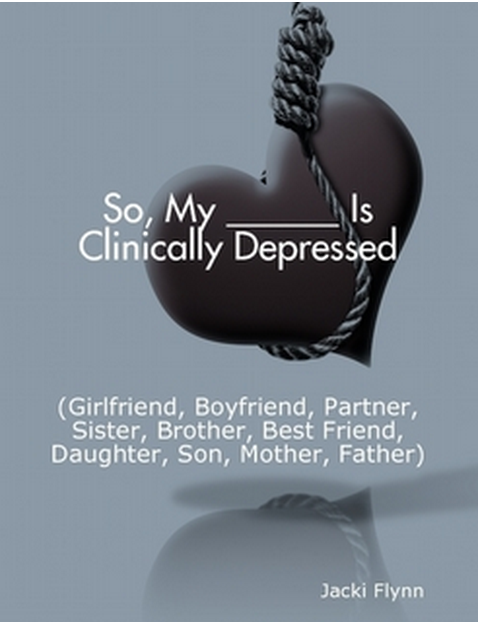
A short eBook for those facing clinical depression in a loved one


I survived clinical depression and I've watched people close to me do the same. I know how difficult it can be to find yourself facing a loved one with clinical depression. I've watched friends of mine struggle with how to help me with an illness they'd never experienced and couldn't possibly understand. It's easy to feel lost and helpless. 

I wrote this book to help people like my best friend. It took us years before I learned to tell her what I needed and she learned how to give it to me. My hope is that this book can shorten that process and help those who feel completely lost when they look at their friend, sister, dad, partner and don't know how to help--and indirectly help those who actually find themselves in the deep, dark hole of clinical depression.

Buy Now
Here is an excerpt on "what to say to a depressed person":

The short and unfortunate answer is that nothing you can say will help. Words of encouragement fall on deaf ears. Don’t misunderstand this to mean that we don’t need you—we do. We need you to listen without trying to fix things, to remind us that you aren’t going anywhere, to let us know that it’s okay that we’re depressed and that you don’t expect us to be happy or smile or pretend that everything is okay. We live in constant fear that our depressive behavior will push you away, that you will “get sick” of us and give up. When you remain present in our lives, we are reassured that you are still in our corner.

Try to avoid questions like “Did you have a good day?” The answer is “No”. We didn’t have a good day. This question makes us feel like you don’t understand that we are depressed, that you expect us to suddenly have a good day, or that you don’t take our depression seriously. You are just being conversational, but once through the depression filter, this innocuous question can be hurtful. A better question might be, “How was your day?” This question gives us a chance to open up and share with you.

We also like to hear about your day. Tell us what you did, who you talked to, or what you’re going through. Telling us about your struggles can be particularly helpful, as they feel less foreign than your happy stories (although, you should share those too!). Avoid trying to commiserate or empathize if you haven’t been through clinical depression. We are happy that you haven’t been in this dark place, trust me, but it’s frustrating when people assume that they know what it’s like if they don’t.

Please consider purchasing this eBook. It's a quick read and I believe the information is invaluable.

Monday, May 18, 2015

Thoughts on Facebook vs. Reality: The argument for defriending

I spend a good amount of time thinking about social media and its effect on us. We've probably all read about the "Fakebook" phenomenon and "social media peacocking" (although maybe not with those terms). Yes, most people put their best foot forward on social media. It's a natural and reasonable thing to do. But the result is often unnatural comparisons that are detrimental to the self esteem of those on the receiving end.

If I look at my Facebook page right now, this is what I gather about "ME".

I'm a single woman in Atlanta who likes to make self-deprecating jokes, spends a lot of time in acting class and on set, enjoys her work and her family and a few close friends, is politically liberal and feels strongly about certain social justice issues, and is currently obsessed with Third Eye Blind. 

Look how much fun I have all the time!
That's all true, but so is this: 

I'm going through a rough time, my acne is driving me nuts and I have an addiction to picking at it so I'm on break from auditioning for my agent, I spend most of my time on my couch because that's where I work and relax, my apartment is a mess, I'm sad that I'm single because I'd like a family someday, and about every third day is just a complete struggle for a myriad of reasons.

As with most lives, mine is a mix of the good, the bad, the beautiful, and the ugly.
Now, as someone who's pretty open, some of my struggles DO come out on social media. But for the average person, they don't. So most of us see a newsfeed filled with happy plans, happy families, funny posts, perhaps a politically-charged rant or two.

People aren't going to start sharing their worst sides online, so what's the solution? Well, I don't know THE solution, of course, but I think one big step is to minimize your friend list.

If I quickly look through my closer friends on Facebook I see friend counts like 1300, 1100, 2200. Even some of my older friends, which is relevant due to when Facebook became popular, etc., I see 700, 800. I know that at one point my total was also over 1000. It's now at 422 due to much defriending and selectiveness on accepting new requests.

Why? Because the number of people I talk to with any consistency is not anywhere close to 1000. Let's say it IS 422 (even though I know it's less), that means if I weren't a frequent defriender with a new approach, I'd be seeing updates from 658 people that I know nothing current about EXCEPT what's on Facebook. 658 people who exist in my mind as their happiest, best selves just sitting there and waiting to be used for comparison.

Now I know Facebook has its algorithms, but we still see way more than it makes sense for us to see without seeing the not so peachy-keen flip side of people's lives. On the other hand, if I see my best friend or sister or favorite castmate posting good things about life, I can simply smile and celebrate with them ... because I do know it's not the full reality. I don't get pulled into any fantasy world. These are my friends and I'm happy to see them happy ... and happy to hug them when they're not so happy.

So I think managing your friend list with a bit of self-interest in mind is a good idea. Alternatively, you could create groups and choose not to see updates or share updates with the people who aren't regularly in your life ... since defriending can come across as a bit dramatic. OR you can switch to Google+ ...

Your thoughts?